
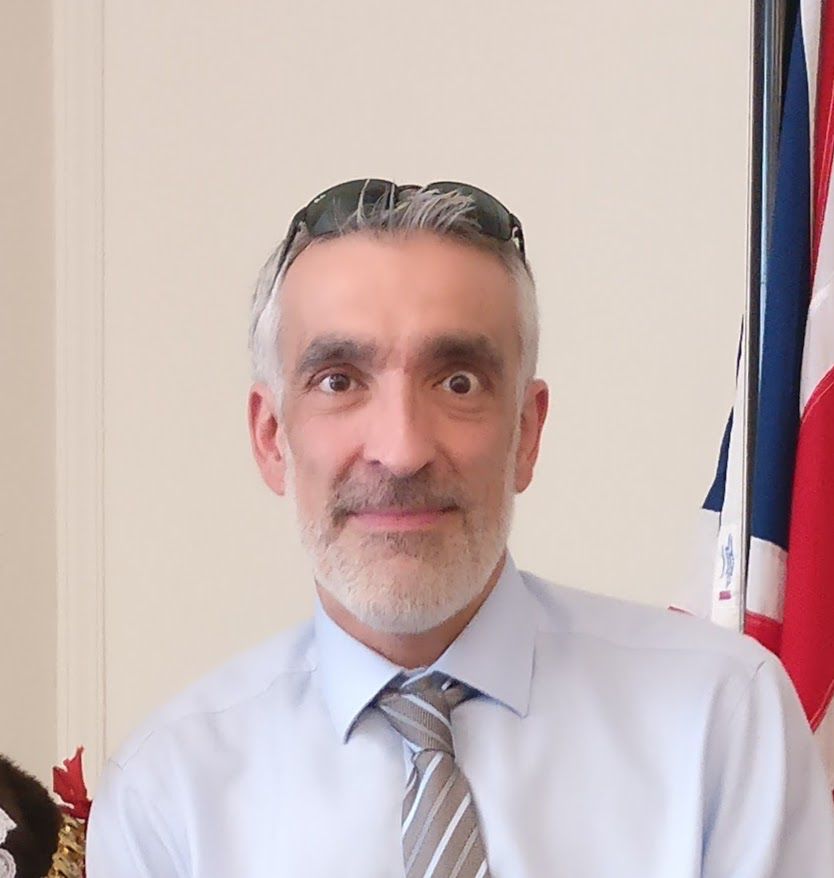
Miguel brings over 20 years of teaching experience across UK and international schools to his work with GCSE, A Level, and IB Diploma Mathematics students. A former Head of Department at two leading international schools, he has taught across MYP, GCSE, iGCSE, A Level, and both DP Analysis and Approaches and Applications and Interpretation, and now examines GCSE Mathematics for Edexcel and AQA, bringing current assessment insight directly into his teaching. That breadth of experience has shaped a clear teaching philosophy: real understanding comes from doing mathematics, not watching it done. In the piece below, he sets out why he builds his lessons around exploration and reasoning rather than memorised steps, and how that approach turns exam success into a natural consequence of genuine comprehension.
One of the things I’ve learned over years of teaching is that mathematics only truly works when students do maths, not just watch it being done. I’ve taught every kind of learner – the confident ones, the anxious ones, the ones who think they cannot do maths, and the pattern is always the same: understanding happens when students engage with ideas, not when they memorise steps.
I always tell my students that maths isn’t a spectator sport. You can listen to explanations, you can copy notes, you can watch someone solve a problem perfectly… but none of that makes the knowledge stick. What makes it stick is the moment you try it, make a mistake, adjust, try again, and suddenly see the idea click into place. That’s the magic of doing maths.
For me, the most rewarding part of teaching is watching students shift from “What formula do I use?” to “Why does this work?” When they start exploring patterns, sketching graphs to see behaviour, or breaking down a problem to understand its structure, their confidence changes completely. They stop relying on memorised methods and start relying on their own reasoning – and that’s when they become genuinely strong mathematicians.
Of course, exam preparation has its place. But exam success is a by product of understanding, not a replacement for it. When students grasp concepts deeply, exam questions stop feeling like traps and start feeling like variations of ideas they already have.
Learning maths by doing maths isn’t just a philosophy – it’s something I see working every day. It builds independence, resilience, curiosity, and real comprehension. And most importantly, it makes maths feel less like a list of rules and more like a subject you can explore, question, and enjoy.